Subscription fatigue in 2026: what the data actually says
Subscription fatigue used to be a vibe. In 2026 it's a measured behavior — you can see it in spending, in forgetting, and in how often people cancel. The short version: households spend more than ever, most people underestimate the total, and a brand-new category (AI tools) is stacking on top of the old ones.
The numbers that define it
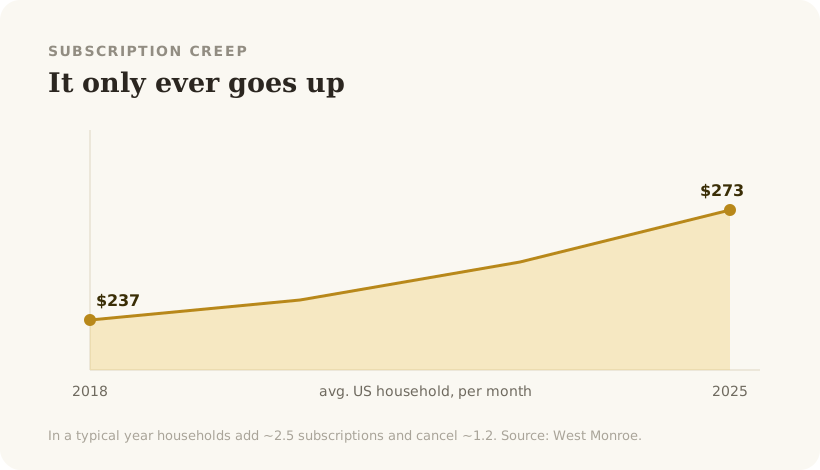
- Households now spend ~$273/month on subscriptions, up from ~$237 in 2018 (West Monroe).
- 89% underestimate their subscription total — often by around 2.5x. Per person, C+R Research puts the gap at ~$86 estimated vs ~$219 actual, about $133/month unaccounted for.
- 42% pay for at least one subscription they've forgotten they have (West Monroe).
- ~48–65% have been charged after forgetting to cancel a free trial (C+R Research; RecurStop).
- ~40% of subscribers cancel at least one service each year (Kearney) — a constant churn of subscribing, forgetting, and trimming.
- 72% put everything on auto-pay (West Monroe), which is exactly why the forgetting happens.
The new layer: AI subscriptions
The fatigue isn't just streaming anymore. A new stack has appeared almost overnight:
- Consumer generative-AI use jumped from about 45% to 73% between 2024 and 2026 (Prophet), and 31% of US adults now use AI multiple times a day (Pew).
- AI users average about four paid AI tools at ~$66/month, and 53% cancel and re-subscribe to them as needs shift (Bango).
Because tools like ChatGPT, Claude, and Perplexity all cost the same $20 and overlap heavily, the AI stack is a near-perfect fatigue machine: identical prices, scattered billing, and heavy redundancy nobody has time to untangle.
Why the system produces fatigue by design
None of this is about being irresponsible. Small recurring charges on autopilot, spread across different cards and dates, are built for frictionless payment — which also means frictionless forgetting. Add "$9.99 doesn't feel like money," annual billing that hides for eleven months, and status-quo bias ("keep it just in case"), and the gap between what people think they pay and what they actually pay is structural.
Meanwhile the market keeps growing: the global subscription economy is projected at roughly $859–904 billion in 2026, approaching $1 trillion by 2028 (Fortune Business Insights; Juniper). More of everything is becoming a subscription, so the fatigue compounds.
What actually helps
The data points to a simple, boring truth: awareness changes behavior. People who see their real total — not an estimate — tend to cut something quickly. A focused 20–30 minute audit realistically frees up $50–100/month. The catch is that the number drifts back up once charges go silent again, so the durable fix is a standing view of your true total plus a warning before each renewal.
FAQ
What is subscription fatigue? The point where the combined financial and mental cost of your recurring services outweighs the value you get. Signs: forgotten renewals, repeated cancel-and-restart cycles, and underestimating your total.
How much does the average person waste? Studies suggest 30–42% of subscription spend goes to underused or forgotten services — roughly $65–92/month for a typical household.
Is subscription fatigue getting better or worse? Spending keeps rising and a whole new AI category has been added, but consumers are also getting more intentional — cancelling and rotating more actively than before.
Pip reads your email receipts to show everything you pay for, flags overlap and price rises, and warns you before charges hit. No bank needed.
Join the Beta →